
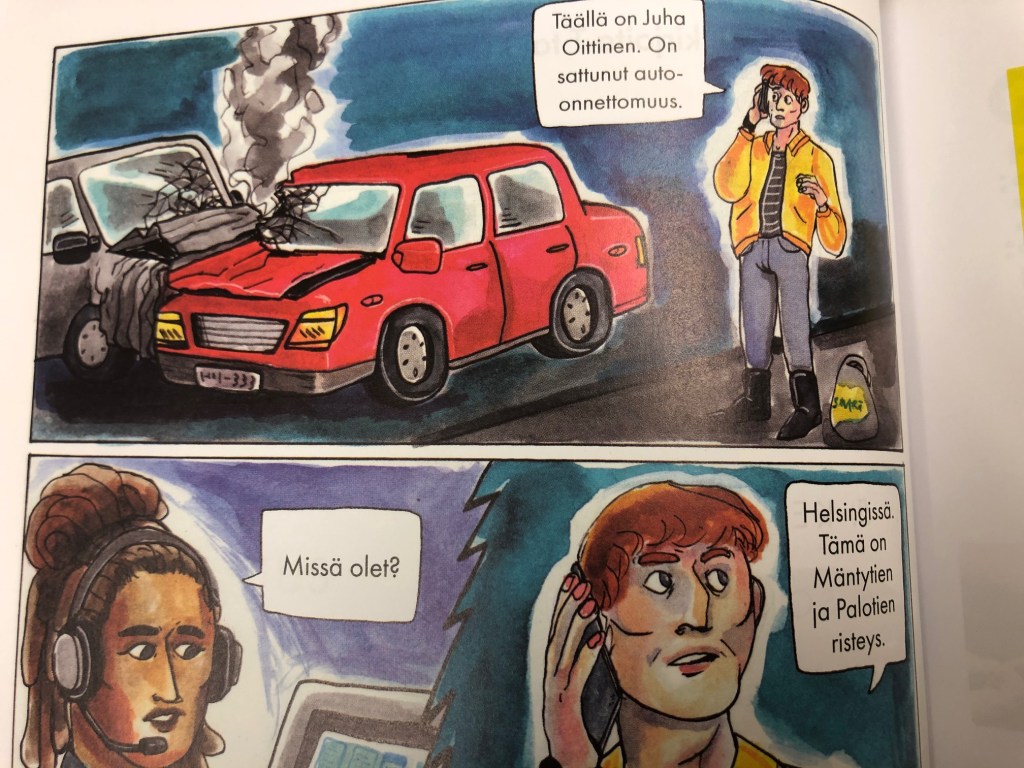
Linguistics studies have demonstrated that the process of learning a language is easier at an early age. A child can learn a second language during the first 10 years. According to reports, a child can benefit in different ways by learning a second language: it helps simulate curiosity, cognitive development, and being more receptive to other cultures.
The problem solving study done in 2004, by psychologists, Ellen Bialystok and Michelle Martin-Rhee, with monolingual and bilingual preschoolers, revealed that bilingual children resolve the task (select objects by shape and colour) quicker.
Worldwide, around 7,000 languages are spoken day by day. A language is a fundamental pillar of a culture and its society because it shapes our mind and the way we think. The freedom fighter, Jawaharlal Nehru, said, “language is something infinitely greater than grammar and philology. It is the poetic testament of the genius of a race and a culture, and the living embodiment of the thoughts and fancies that have moulded them”.
Miskito and Finnish language
I was born and grew up in an intercultural environment. At home, I learned my mother tongue, and a second at school (Spanish). I also understand Miskito (fairly), which is one of the native indigenous languages in Nicaragua.
Miskito is a Misulmapan language, which along with Sumo and Matagalpan, comprises this linguistic family. It is spoken by almost 150,000 people in the North and South Caribbean Coast of Nicaragua and the eastern coast of Honduras, both Central American countries.
Moreover, the Miskito language uses the five vowels, most of the consonants can be voiceless, nasal etc., It has present, past and future tenses, uses adjectives, adverbs, and pronouns.
Furthermore, in a sentence a verb is regularly located at the end, and the subject, if a noun phrase, usually precedes objects and constituents, for example, Yang Honduras ra iwisna (I live in Honduras), Yang wan sna witin ra yabaia (I want to give it to him/her).
Years ago, I flew over the Atlantic Ocean to start a new life. I moved to Finland and immediately attended a Finnish course. It was interesting to get in touch with a language completely different from the two languages I speak. It was a challenge to internalize pronunciation of long vowels, pronounce Y as J, learn some of the 16 cases that exist, and write double consonants. The ride had been bumpy, but I don’t regret the time and effort I put into it.
Finnish is a Finno-Ugric language, which includes Hungarian, Estonian, and Sami, spoken by indigenous people of northern Finland, Sweden, Norway, and northwestern Russia.
This language spoken by over 5 million people has eight vowel sounds and thirteen consonant sounds. It also has a large number of diphthongs (2 vowels that belong to the same syllable), for example, aika (time), punainen (red) kirjain (letter) äiti (mother) etc.
Moreover, it has no articles, no grammatical gender. It is spelt nearly as how it is pronounced, and has no future tense.
On my first week of class, the teacher made a short test, asking our name, address, age etc. I remember days after she gave the scores, I laughed because I misspelled my address, I wrote kusi (pee) street and not kuusi (six). Stories like this were repeated over and over. I am sure that you also have some amazing experiences while you were learning a new language.
According to the survey, the Finnish Language is one of the 10 most difficult languages in the world. So, now I guess you understand me. However, I feel proud to learn this language and use it. I think that also the Finnish people are shocked to hear a lot of immigrants speaking their language.
A Swedish friend who lived in Bilwi, North Caribbean Coast of Nicaragua, told me, “the Finish language sounds like Miskito”, and yes it does. It has a strong pronunciation and sounds like you are fighting with the other person you are speaking to.
Same words-different meaning
Miskito
apu
aika
aula
kaisa
kumi
laulu
papu
English
none, nothing
different
comes
up
ten
red mangrove
fireant
Finnish
apu
aika
aula
Kaisa
kumi
laulu
papu
English
help
time
hall
name
rubber
song
bean
Other similarities between both languages are that all of the months of the year end with the word moon.
Finnish Miskito English
Talmikuu Siawkwa Kati January
Helmikuu Kuswa Kati February
Joulokuu Trisu Kati December
Linguistics diversity plays an important role in shaping our mind, so if you have the opportunity to learn a second or third language, I strongly recommend to do it, because you will learn not just the language, but also its culture.
 Women Wheel
Leave a comment