
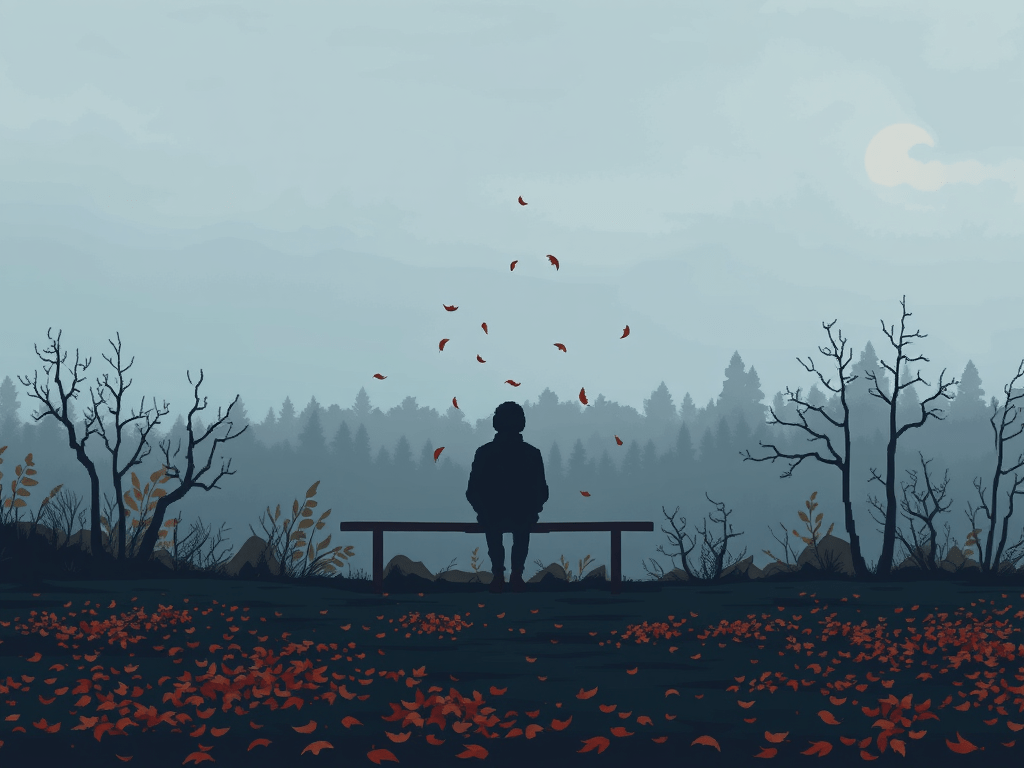
We all experience rough times in life because things are not always rosy. It’s again autumn in Finland—a dark, cold, and grey season. This time of year reminds me of my first depression. It was the most challenging and coincided with my divorce process.
During that period, I barely slept for months. I lost all interest in eating or socializing. All I wanted was to retreat into my space and lose track of time. My depression lasted for months, and it consumed me. I lost weight and became submerged in my world. A friend later told me that I often had “nervous laughter breakdowns” when I was with her. I was not even aware of this at the time. I remember clearly crying whenever and wherever felt like it.
I was angry, sad, frustrated, and deeply disappointed. It was an incredibly difficult time, but I eventually overcame it. I’m grateful for my inner strength. I also appreciate the support of my family and friends, both overseas and here in Finland. I also sought help through multiple sessions with a psychologist.
This experience taught me a lot. It made me stronger. It helped me understand the importance of having a support system. It reminded me that prioritizing my well-being is essential.
This is my story. What about yours? Have you ever experienced depression or supported someone through it?

What is mental health?
The World Health Organization (WHO) defines mental health as “a state of mental well-being.” This state enables people to cope with the stresses of life. It helps them realize their abilities and learn and work effectively. It also allows them to contribute to their community. It is an integral component of health and well-being that underpins our individual and collective abilities to make decisions, build relationships, and shape the world we live in. Mental health is a basic human right and is crucial for personal, community, and socio-economic development.”
Mental health encompasses a wide range of conditions, including mental disorders and psychosocial disabilities. According to the World Health Organization, approximately 970 million people worldwide were experiencing mental health issues in 2019.
Depression in Finland
I have been living in Finland for several years. It is a developed country with many advantages, for example, free education. Finland is ranked the “Happiest Country in the World” for seven consecutive years by the World Happiness Report. However, it still has a high prevalence of mental health issues. The report measures happiness across different stages of life. However, happiness does not necessarily equate to the absence of mental health challenges.
Finland’s society continues to grapple with significant mental health problems. According to a report by the Finnish Institute for Health and Welfare, one in six Finns experiences mental health issues. The most common conditions include depression, anxiety, and substance abuse. Furthermore, the report highlights that women are more prone to depression than men.
Finnish Health Institute reported that in 2023 workplace discrimination also emerged as a factor linked to mental health. According to statistics, 16% of women aged 20–74 reported experiencing discrimination at work or while job hunting. In comparison, only 11% of men reported similar experiences. Research professor Anu Castaneda noted that discrimination significantly impacts people’s sense of security and mental health. It also affects loneliness, well-being, trust, and quality of life. Therefore, it is crucial to actively address discrimination in various settings, including the workplace, service interactions, and everyday encounters.”
Stereotypes
Mental health issues are determined throughout individual lives. They are influenced by social structure, economy, and contexts like violence, poverty, inequality, and deprivation (WHO, website). Many people view and react toward mental health issues backwardly. People with mental health conditions regularly experience violations of human rights, discrimination, and stigma. According to a paper, stigma on mental health can cause individuals to seek less help. This is due to feelings of shame, guilt, social concerns, and self-image ( Bharadwaj, Pai & Suziedelyte, 2015).
An example is the case of the partner of a friend, who suffered from depression. Years ago, at a summer picnic, some of the circle of friends were talking about this common friend’s partner. It irritated me when two of them called her “lazy or crazy”. I explained to them what I knew about depression from my experience. It is not an easy illness. However, they did not get it. They refused to understand. These comments mostly came from a woman toward another woman.
We often make assumptions if we know someone is attending psychologist sessions. We think that their life is at a difficult point. Alternatively, we assume they are crazy. Individuals with mental health often face stigmatization and discrimination.
I have learned that our ignorance and misunderstanding can be the reasons for our misconception of mental health concepts.
Looking for Help
I know it’s not easy to understand someone with mental health issues. However, based on my experience, if you haven’t lived it yourself or haven’t supported someone close to you through it, I recommend the following:
- Don’t judge.
- Start with yourself. Ask questions about the problem to understand it better—don’t make assumptions.
- Don’t be reactive; instead, be proactive.
- Educate yourself. Read about mental health to increase your understanding and help reduce stigma and labels.
- Be respectful. Ask the person directly about their situation if you want to help. Avoid gossiping about it.
Individual well-being is primarily our own responsibility. However, the system must provide comprehensive services within the community that support mental health.
Remember, we are all human, and mental health issues can affect anyone. Let’s prioritize our mental well-being. TAKE CARE OF OURSELVES.
 Women Wheel
Leave a comment