

A few years ago, a friend introduced me to Hope Nwosu at a poetry reading organised at Pasila Library. A few weeks later, I interviewed Hope for the podcast Migrant Tales. She shared her poetry journey and also talked about writing her fist novel.
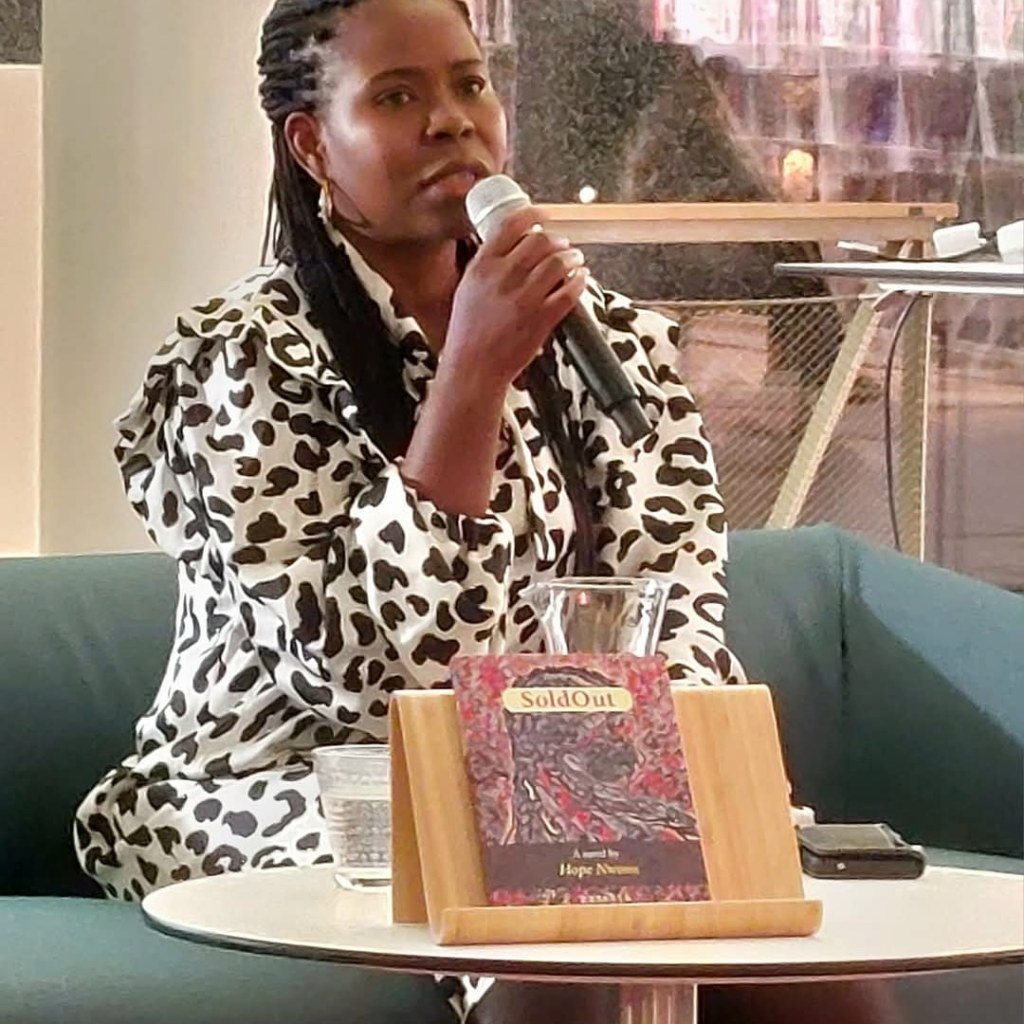
In the summer of 2024, at the same place where we first met—Pasila Library—Hope fulfilled one of her dreams. She presented her debut novel, Sold Out, surrounded by family members and friends. It was a wonderful event that highlighted her rich Nigerian cultural background, one of the central themes of her novel.
I spoke with Hope at the book launch and expressed my interest in interviewing her for my blog. Later, we met at a coffee shop for the interview. Despite the lively background noise—Christmas music, the hum of machines, and chatter—we had a delightful conversation.
Hop on for an in-depth look at Sold Out and insights from my chat with Hope!
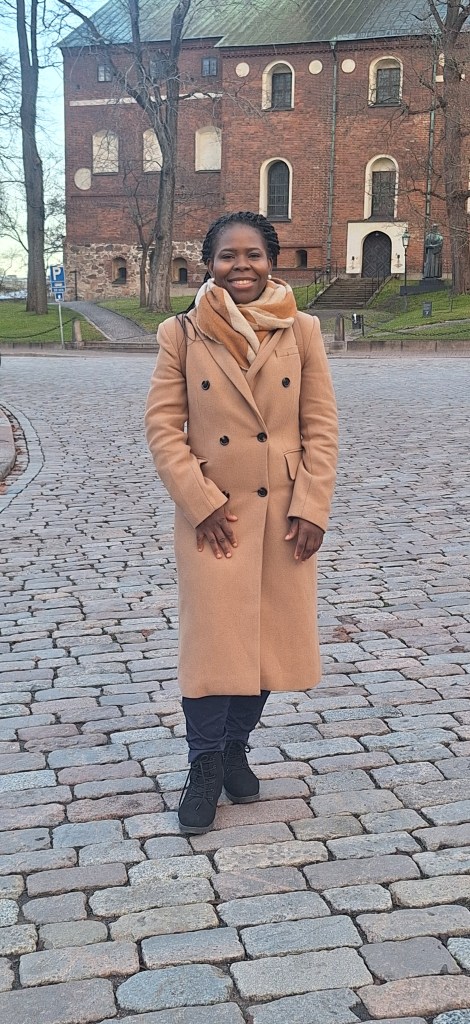
Hope Nwosu
Women Wheel:Who is Hope Nwosu? What motivates you?
Hope: I am a Nigerian-born author who has lived in Finland since 2012. I am a social service professional and a public speaker. At the moment, I work at Vantaa Employment Services. I am also a mother of four, including a newborn.
It’s not an easy question to answer, but my first motivation is my children. Secondly is the desire to be the change I want to see in my society. Finally, the wish to impact through my work is also a significant motivation for me.
Writing Journey
WW: I know that you have been writing a long time ago. Please tell us more about your writing career.
H: I started writing many years ago, but many of my works remained published until recently. My first short stories were published in 2014. Since then, many more of my short stories have been published, including those presented in several anthologies. Moreover, some of the speeches that I have delivered at events have also been published. My speech, “Humans are not Numbers”, was published in We See You. This is a collection of speeches about human rights. It was published in 2019.
Sold Out topics and structure
WW: This past summer, I was at the presentation of your novel Sold Out. I read the book, but I don’t want to be a spoiler. Can you tell what it is based on?
H: Sold Out is about the life of a young girl. She has the desire to start all over again despite the challenges and setbacks. So that’s the main theme in the book. We want you to read it!
WW: I agree with that. Why did you choose to write about social injustice? Of African women in a world that is dominated by males?
H: I decided to write about it because there is a lot of injustice in the world, especially gender-based injustice. I want to encourage more public discussion on the topic and I also advocate for change, where men and women, girls and boys, have equal rights.
Additionally, I want a society where the limitations that keep women down can be dismantled. This change will allow women to be as free as every human being. It will enable them to achieve their dreams.
The topic is very important, timeless and timeworn. Of course, the topics and the experiences of the characters bring a lot of emotion. However, I think it is a very important topic that is worth writing and reading as well. It should cause discussion that can translate into actions needed to drive change in society.
WW: Why did you develop the topic of human trafficking of Nigerian women?
H: Sold Out as a book is based on a true-life story. The stories that you read in the book are the experiences of some women from Nigeria. So, I decided that it was very important that this story be known by as many people as possible to shed light on the challenges these women face.
Through the reading of this book, I hope to inspire public conversations that can bring greater awareness to the issue of human trafficking. I aim for these discussions to positively influence the lives of victims and survivors. My goal is to drive meaningful change in their circumstances.
WW: When I read the book, something that caught my attention was that you did not victimise the protagonist. This approach made it easy to read. Was this something you thought about while planning the novel, not to describe everything? For example, the scene when she started working as a prostitute.
H: When I wrote the book, I knew that not every scene could be described. Otherwise, we would have a big volume. I felt that some things are better imagined than seen. Therefore, there wasn’t a need to describe every scene, especially when she became a prostitute on the street.
In some of the scenes, the readers can think for themselves and be able to imagine what the character goes through.
At this point of the conversation, the coffee machine kept delivering coffee for the clients. While we start to discuss the structure of the novel.
WW: Why did you decide to write a food recipe at the ending part of each chapter?
H: That’s a question the readers ask every time. (Hope laughed). The answer is simple. The topic, as we know, is very challenging because it brings a lot of strong emotions when you read it. First, I added food recipes in the novel to give a break to the reader. To digest all the sad stories that they have read in the previous chapter. The second reason was to introduce the reader to the other aspects of Nigerian culture which they probably didn’t read in the chapters of the book or didn’t know about.
Community vs Money
WW: On pages 51,52, and 53, you talk about the lack of community once she is in Europe. Why did you point out this? And I I’m very intrigued to hear your answer.
H: This is, unfortunately, the reality of many people who move, for example, from societies that are communal-based. Chioma, the main character in this book, comes from a place where the community role is very important. However, while she is based in Italy, she realises that she misses, amongst other things, the sense of feeling like a part of the community where she lives.
The reason to stress this topic is to shed light on the larger situation, the lack of community. This is the reality of many immigrants who move to Europe or to other societies that are different from theirs.
When I moved to Finland over 12 years ago, it was a different life that I witnessed. It was different from what I was used to in Nigeria, where I was born and grew up. Nigeria has this community-based society. In contrast, we live in an individualistic society in Finland and maybe in other European countries.


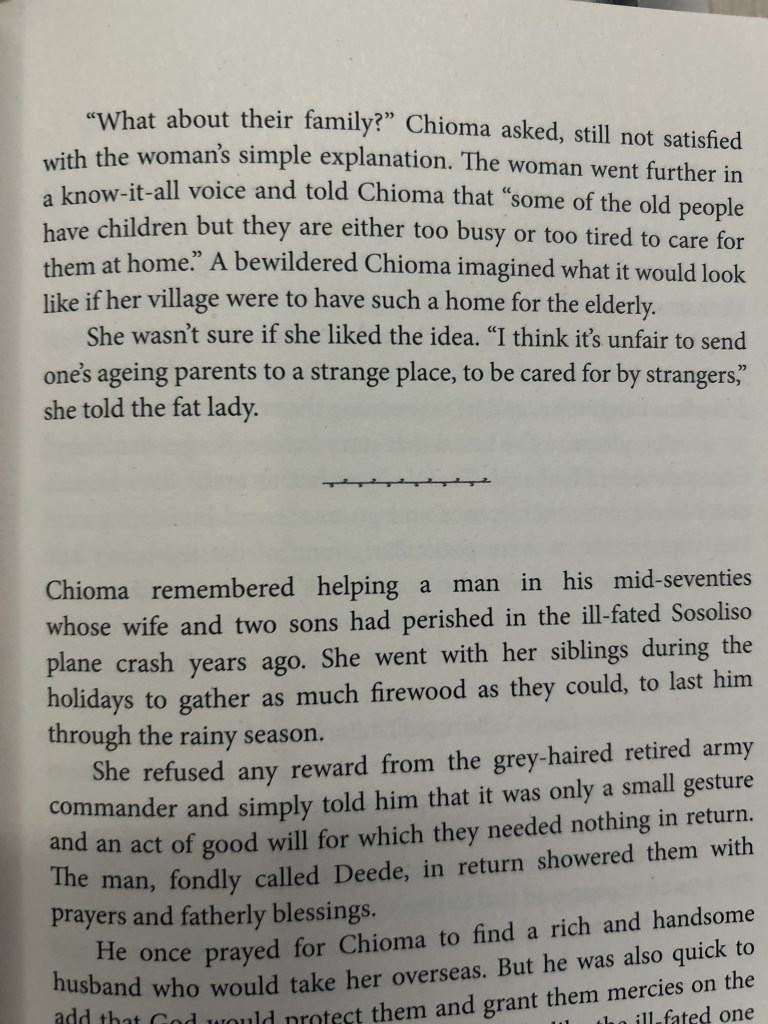
WW: In the chapter titled The Unwritten Rule, Chioma is frustrated with her family members when she calls because, they constantly request more money from her. Why did you counter this money vs community-based society?
H: Being from a community-based society has its disadvantages. There is a sense that you are responsible in a way for people in your family, and this can be, as you said, quite stressful, especially for those who have travelled abroad and the family back home believe that they need to look after one another then. It is a kind of expectation that the person who has the means should take care of others. Like in this story, for Chioma, it became overwhelming at a point. She always listened to her family’s needs without them even asking or knowing what she was doing for a living. They did not know how she was surviving.
WW: How do you think people will react when they read this chapter?
H: It can seem like a contrast. First, you read how nice it was to come from a community-based society where everyone looked after the other. Then you read about being overwhelmed because of the pressure from the family. But unfortunately, this is the reality of many people. Sometimes, they indeed miss the loved ones they left back home; they miss their community-based living where people look after each other. However, the reality is that it’s not always easy. In this chapter, the reader can realize that no society is perfect, be it community-based or individualistic based. The main thing is to always remember that we are human beings and that, first of all, we should see and treat each other as human beings.
Advice
WW: What advice would you give to women coming from Africa to Europe or migrating to another country?
H: My advice would be that first, you’re a human being. And then you’re a woman. And don’t let anyone bring you down or put you down because of your gender. As a woman, you have equal access to, for example, education and employment, and you should achieve your dream. You should go for your dream, whatever you believe in or you have in your heart to achieve. In your life, don’t let your gender be an obstacle to your dreams.
WW: So, did you think of quitting at some point?
H: Yes, because the journey to publishing this book, Sold Out, wasn’t an easy one. There were a lot of ups and downs and rejections along the way. I thought that, OK, maybe this book is not meant to be published. However, I knew the stories in the book would touch lives. They would change lives and impact lives positively. That was the reason I refused to give up. To readers and prospective readers of Sold Out, no matter the situation you find yourself in, remember that winners don’t quit, and quitters don’t win. When you quit, you cannot win, you can’t achieve your dream, so don’t quit. Keep on pushing until you achieve your dreams.
WW: Can you mention three takeaways you learned as you wrote Sold Out?
H: That’s you don’t take no for an answer. The only limits are the ones you place for yourself. Winners don’t quit, and quitters don’t win.
WW: Do you want to add something else?
H: When you read the novel, then you can understand the situation and the message the character is trying to share. I recommend picking up a copy of the novel for yourself. Share your thoughts on the character’s struggles and their journeys.
If you haven’t read Sold Out yet, now is the perfect time to get your copy! Dive into these powerful and inspiring story that bring to light the resilience of women and the urgent need to combat human trafficking. For more information or to purchase the book, please contact Hope via email: hopenwosu(at)gmail.com.
Do you want to buy Sold Out?
 Women Wheel
Leave a comment