
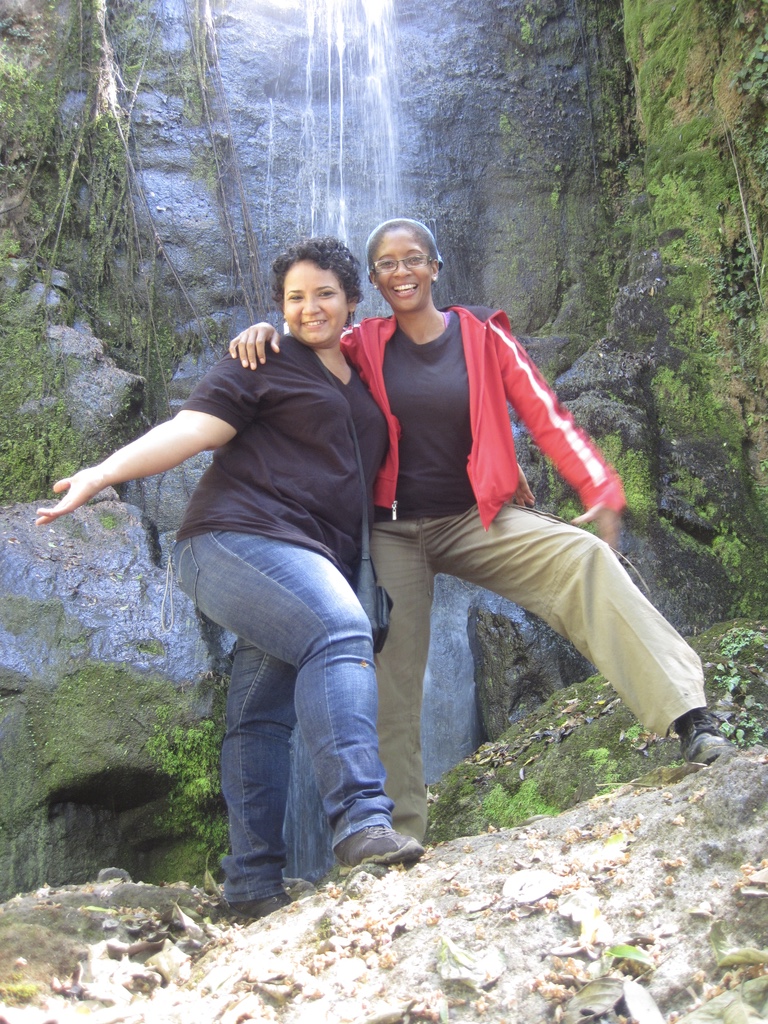
I have been living in Finland for over six years. Before moving here, I worked as a communicator and journalist for many years in the field of international development and social justice. My experience as a journalist began at a local TV station in my hometown. Over time, my career grew. I eventually coordinated a project with journalists from the Caribbean and the Pacific Coast of Nicaragua. Additionally, I worked as a freelancer, creating various communication products.
Since moving to Finland, my professional career has shifted. I have worked in different places, including restaurants, kindergartens, schools, festivals, modeling, and more. However, I have also had the opportunity to work as a freelance journalist and consultant. I am grateful for these diverse experiences, as they have taught me a lot. Yet, as a professional with strong skills, I often reflect on my career journey and the challenges it has presented.
The journey to finding a job in my professional field has not been an easy one. However, I have not given up. Several factors influence this process. First, Finland has a small and highly competitive labor market. Second, I am an immigrant woman, Black, and over 40 years old.
Please don’t misunderstand me—I am not just complaining. I want to highlight that not everyone has the same opportunities and privileges. Social discrimination plays a significant role in limiting access to better opportunities.
Are you an immigrant woman? Do you relate to this story?
According to Statistics Finland, as of January 2025, 8.9% of the population aged 15 to 74 are unemployed, while 76.2% of individuals aged 20 to 74 are employed. The same source states that nearly 6% of Finland’s population comes from a foreign background. In 2020, a study was conducted by the European Migration Network (EMN). It found that the employment rate of third-country migrant women in Finland was only 41%. In contrast, it was 72% for Finnish women. This statistic clearly illustrates the underrepresentation of immigrant women in the labor market.
I am one of the individuals who have a job, even though it is a part-time. For years, I have applied for numerous jobs, just like many other immigrants in this country. The statistics above make it clear that Finland’s labor market is limited. This makes it especially challenging for immigrant women to secure stable employment.
As I discuss job opportunities with my friends, I sometimes feel frustrated, depressed, and lost. It is not an easy road because society often places me into stereotypical boxes, making life more complicated. Despite these challenges, I have not allowed discrimination to stop me from pursuing job opportunities or contributing to the community.
During my job search, I joined a +40 women’s group organized by Familia ry. There, I met amazing women from different countries with impressive professional backgrounds. We meet once a month to share our job-seeking experiences, exchange tips, and support one another as immigrant women. This group of highly skilled professionals signifies what the study Enhanced Labour Market Opportunities for Immigrant Women – Case Studies from Arctic Cities (Akureyri,Luleå,Rovaniemi), describes as “brain waste,” which is prevalent in Finland.
The study also notes that non-professional jobs are among the few available options for many immigrants. These include cleaning, taxi driving, and newspaper distribution (Sigurjónsdóttir, Wøien, Meck, & others, 2018).
Currently, I continue to search for a job in my field while working part-time, freelancing, and taking on various gigs to pay my bills. I am not planning to give up just because I am an immigrant in Finland. This journey has made me stronger. It pushed me out of my comfort zone. It introduced me to many women on the same path. It taught me to appreciate what I have. It helped me manage my finances. It encouraged me to embrace who I am.
My biggest takeaway from this journey is the importance of being part of a community or support group that has your back in difficult times.
We are on this journey together. I am not giving up, and neither should you.
 Women Wheel
Leave a comment