
This past June, I travelled to Indianapolis, Indiana, to visit my sister and her family. It had been over two years since we had last seen each other, so being together again felt incredibly special. Laughter, long conversations, watching movies, and shared meals reminded me just how grounding family time can be.
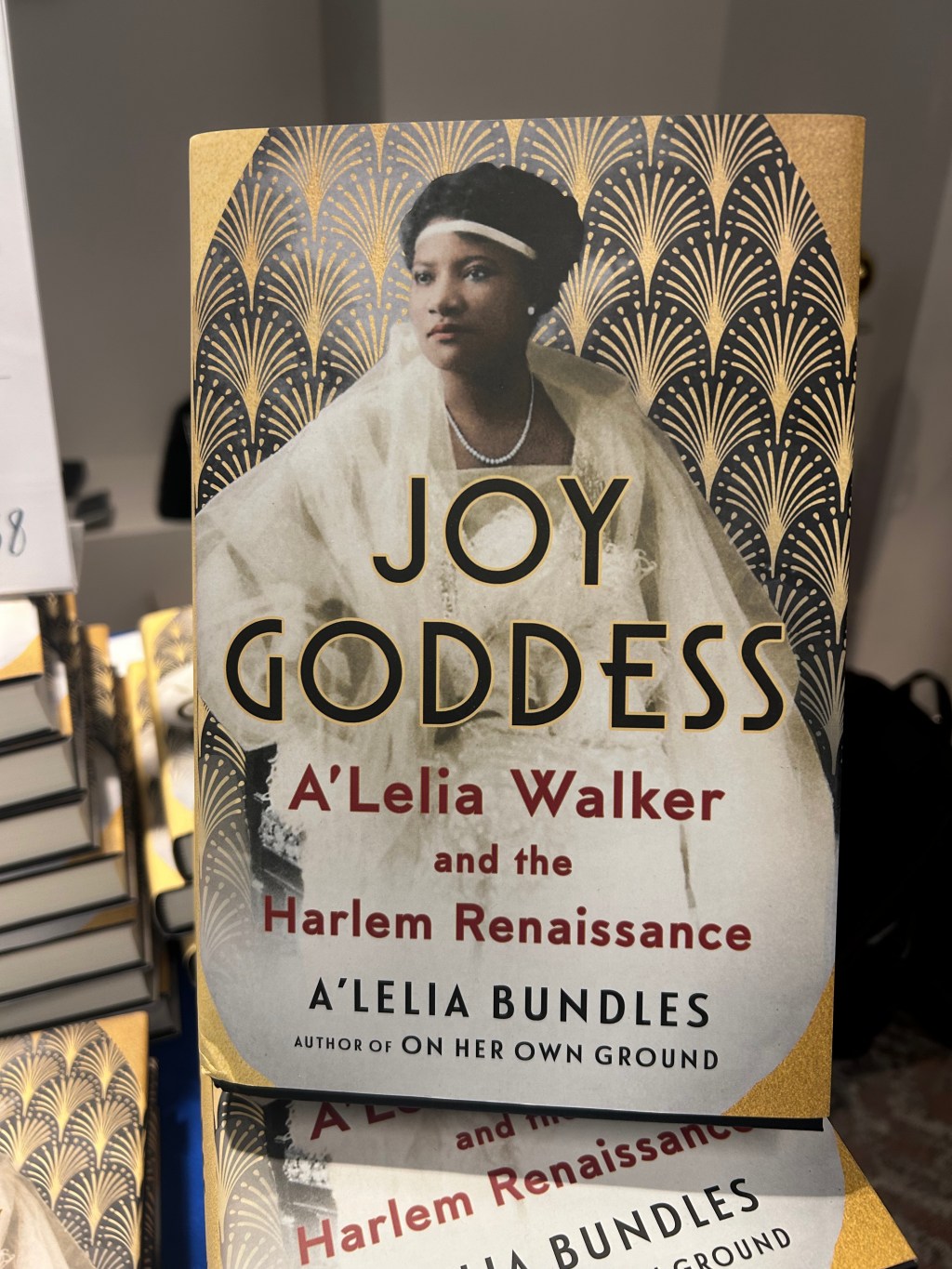
While I was there, my brother-in-law invited us to attend the book presentation. It was for Joy Goddess: A’Lelia Walker and the Harlem Renaissance by A’Lelia Bundles. The event took place at the historic Walker Theatre in downtown Indianapolis—a location that felt just as meaningful as the book itself.
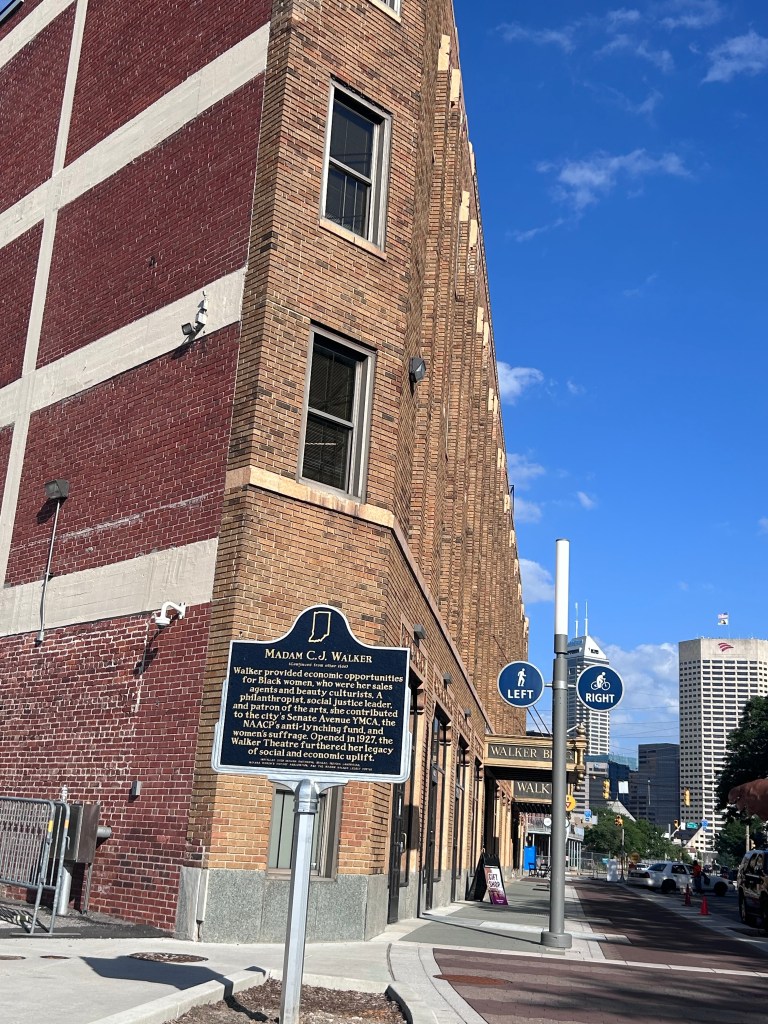
It was a beautiful, sunny Sunday afternoon when we arrived. The Walker Theatre, a landmark opened in 1927, was Madam C. J. Walker’s vision to replace it as the headquarters of Manufacturing Company (Bundless, 2025). It carries so much history within its walls. As soon as we stepped inside, I could feel the energy of the place. My brother-in-law greeted a few familiar faces. I took in the room as a newcomer. I was ready to observe, connect, and learn.
Book Presentation
The Black community showed up in full presence for this event. Members of A’Lelia Bundles’ family were there, dressed elegantly in white, along with friends, and readers who clearly shared a deep respect for this story and its legacy.
While my sister and her husband mingled, I made my way to the line to get my book signed. I was excited. Waiting in line turned out to be a joy in itself, as I exchanged conversations with other attendees who shared their enthusiasm for the book. Just before it was my turn, an announcement was made that the signing would pause so the presentation will begin. We were reassured that it would resume afterwards, and we were given numbers to keep our place.


Once seated in the theatre, we listened as A’Lelia Bundles spoke about her inspiration for writing the book. She shared insights into the life of A’Lelia Walker, the daughter of Madam C. J. Walker—an entrepreneur, as well as an activist and philanthropist. Hearing this story told in such a powerful space made it even more moving.
Joy Goddess: A’Lelia Walker and the Harlem Renaissance is the result of extensive research. This research is drawn from family correspondence, personal items, and historical sources. Through its pages, readers are invited to step into the vibrant world of Harlem. They can travel, dance, listen to music, and absorb poetry, art, and history guided by A’Leila. The book feels immersive, like a cultural feast that captures the spirit, elegance, and complexity of A’Lelia Walker’s life and the community.
Our stories are there; we just have to know how to look for them.
A’Leila Bundless
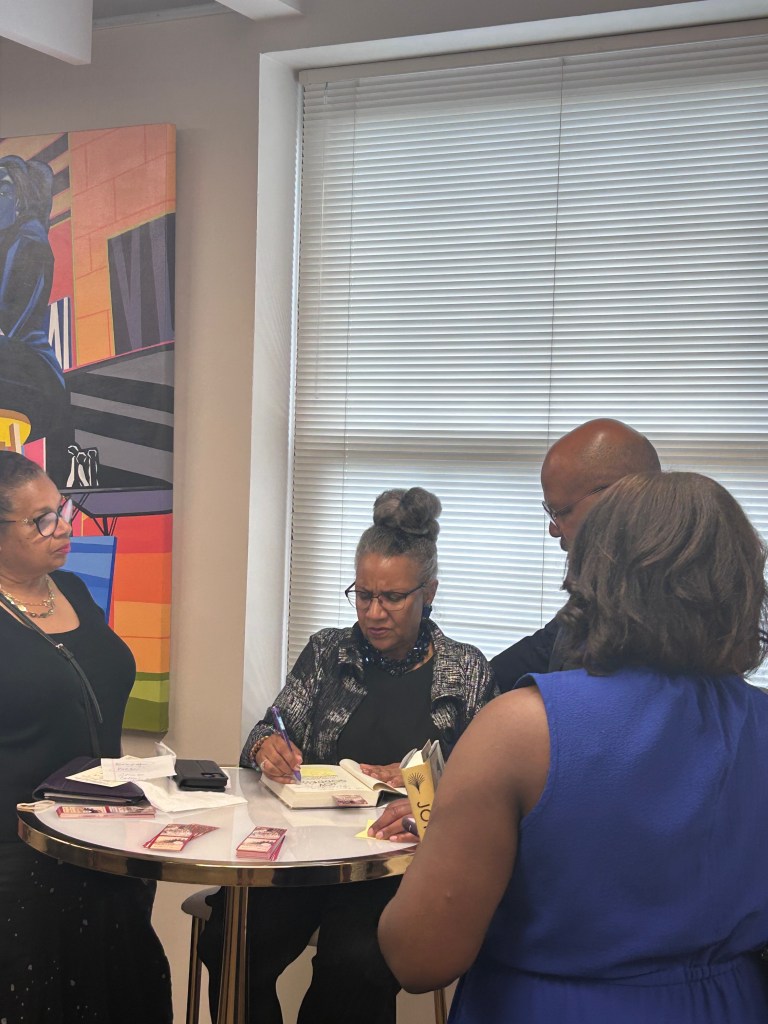
As soon as the presentation ended, I quickly returned to the line—determined to get my book signed. Eventually, I reached the table, had my book signed, and exchanged a few words with A’Lelia Bundles herself. It was a brief moment, but one I will always remember.

This book now holds a special place on my bookshelf as part of my Black writers collection. It is a powerful story of a woman who was ambitious, determined, and unapologetic in shaping her own life. Above all, it is a celebration of Black women’s power, creativity, and legacy.
References
Bundless, A. ( 2025). Joy Goddess A’Leila Walker and the Harlem Renaissance. Scribner.
Green, S. My notes.
 Women Wheel
Leave a comment